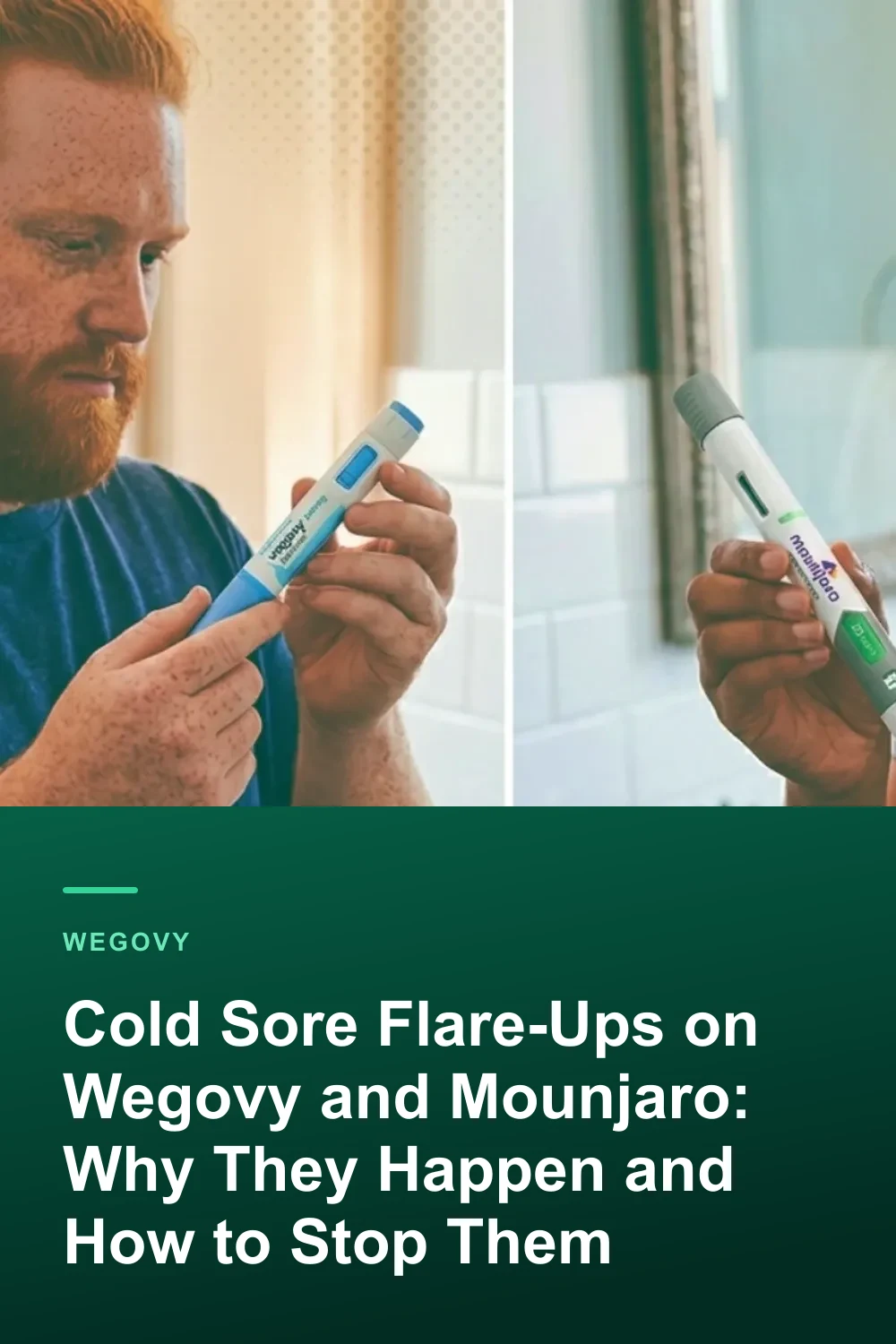
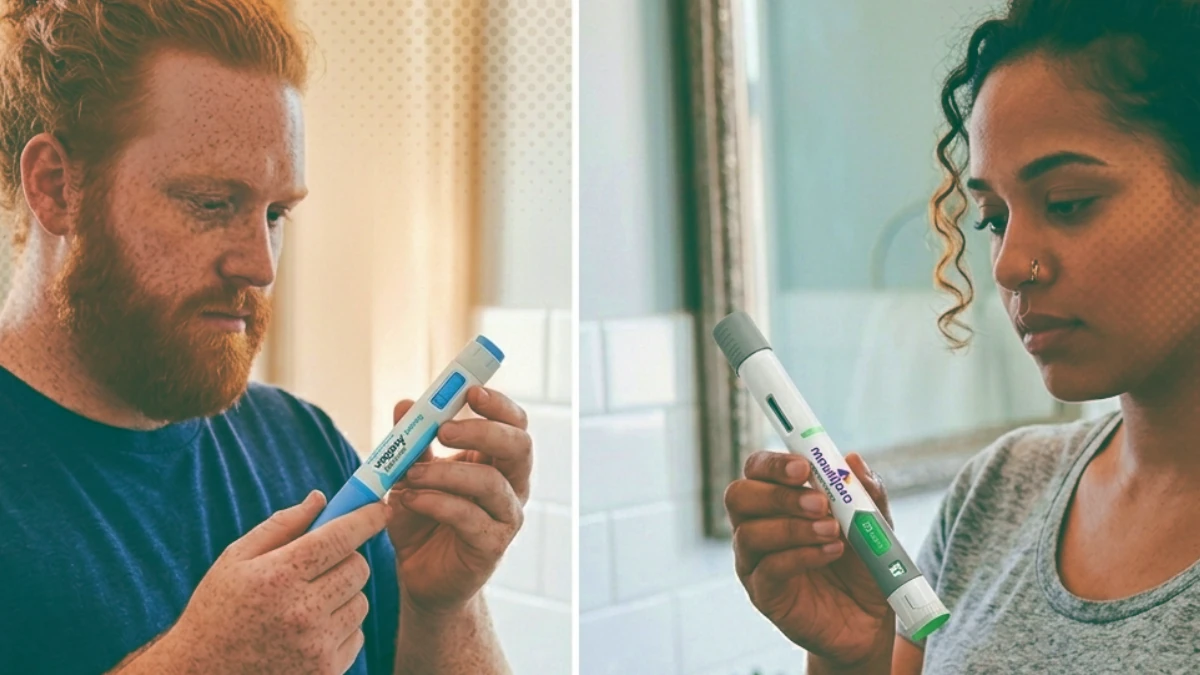
Wegovy (semaglutide 2.4mg) and Mounjaro (tirzepatide) are two of the most widely used weight-management medications on the market. Wegovy is a higher-dose formulation of the same molecule in Ozempic. Mounjaro operates differently — it is a dual GIP and GLP-1 receptor agonist, the first of its class. Despite their differences, users of both drugs report the same unexpected side effect: cold sore flare-ups in the weeks following initiation or dose escalation.
Patient forums and social media threads — particularly r/WegovyWeightLoss and r/Mounjaro on Reddit — are filled with accounts of users experiencing more frequent or severe herpes simplex outbreaks than usual. Many are confused about the connection. A weight-loss injection and a cold sore seem entirely unrelated.
They are not. While neither semaglutide nor tirzepatide directly activates the herpes simplex virus, both drugs trigger a cluster of physiological changes that, taken together, lower the body's defences against HSV-1 reactivation. This article explains the specific mechanisms — including one unique to tirzepatide — and provides a clear prevention framework for each.
Simplix Viral Defense
Cold Sore & HSV Support

Simplix Viral Defense
Cold Sore & HSV Support
Synergistic formula combining L-Lysine, shiitake mushroom, and marine bioactives for comprehensive immune support.
SHOP NOW & SAVE 15%How Cold Sores Reactivate: The Basics
HSV-1, the virus responsible for cold sores, never leaves the body after the initial infection. It retreats into the trigeminal nerve ganglion — a cluster of nerve cells near the base of the skull — and remains dormant. The immune system, specifically CD8+ T-cells, acts as a continuous suppressive guard keeping the virus in check.
When this immune surveillance weakens — even briefly — the virus travels back up the nerve to the lip surface, causing the familiar tingling, blistering, and crusting. The triggers are well established: psychological stress, physical illness, UV exposure, dietary shifts, hormonal changes, and localized skin trauma. For a full breakdown of these triggers, see our guide on what triggers cold sores and how to prevent them.
What makes Wegovy and Mounjaro interesting from an HSV perspective is that they activate several of these triggers simultaneously — especially in the first 8–16 weeks of treatment, when side effects are most pronounced and dosing is being escalated.
Before examining the triggers, it is worth understanding what makes these two medications different from each other — and from Ozempic, which shares semaglutide with Wegovy.
Wegovy uses semaglutide at a target dose of 2.4mg weekly — significantly higher than Ozempic's maximum of 2mg. It is approved specifically for chronic weight management rather than diabetes, meaning its users typically do not have the baseline metabolic disease management context that Ozempic users do. The higher dose translates to stronger appetite suppression and more intense GI side effects during titration.
Mounjaro (tirzepatide) is pharmacologically distinct. It is a dual agonist that activates both GLP-1 receptors and GIP (glucose-dependent insulinotropic polypeptide) receptors simultaneously. GIP receptors are expressed on a wider range of tissues than GLP-1 receptors, including adipose tissue and certain immune cells. This broader receptor engagement is what makes tirzepatide particularly effective — but it also means the systemic impact during the adjustment period is more extensive than with a pure GLP-1 agonist like semaglutide.
Why Wegovy and Mounjaro Trigger Cold Sore Flare-Ups
Neither semaglutide nor tirzepatide appear in official prescribing documentation as drugs that cause herpes outbreaks. But the anecdotal signal is too consistent to dismiss as coincidence. The mechanisms below explain why, and they differ slightly between the two medications.
The GLP-1 Receptor and Immune Cell Modulation
GLP-1 receptors are expressed not only in the pancreas and gut, but also on T-cells and dendritic cells, the immune cells most responsible for keeping HSV dormant in nerve ganglia. Activation of these receptors by semaglutide appears to modulate T-cell activity in ways that are not fully characterised. This is not immunosuppression in the clinical sense, but even a mild transient shift in immune surveillance during the titration phase can lower the threshold for HSV reactivation in susceptible individuals.For Mounjaro users, the GIP receptor adds another dimension. GIP receptors are present on macrophages and other innate immune cells. The dual-agonist nature of tirzepatide means it engages immune-resident receptors on a broader scale than semaglutide alone, potentially amplifying the transient immune modulation effect during the early weeks of treatment.
The Four Core Indirect Triggers — and How They Differ Between the Two Drugs
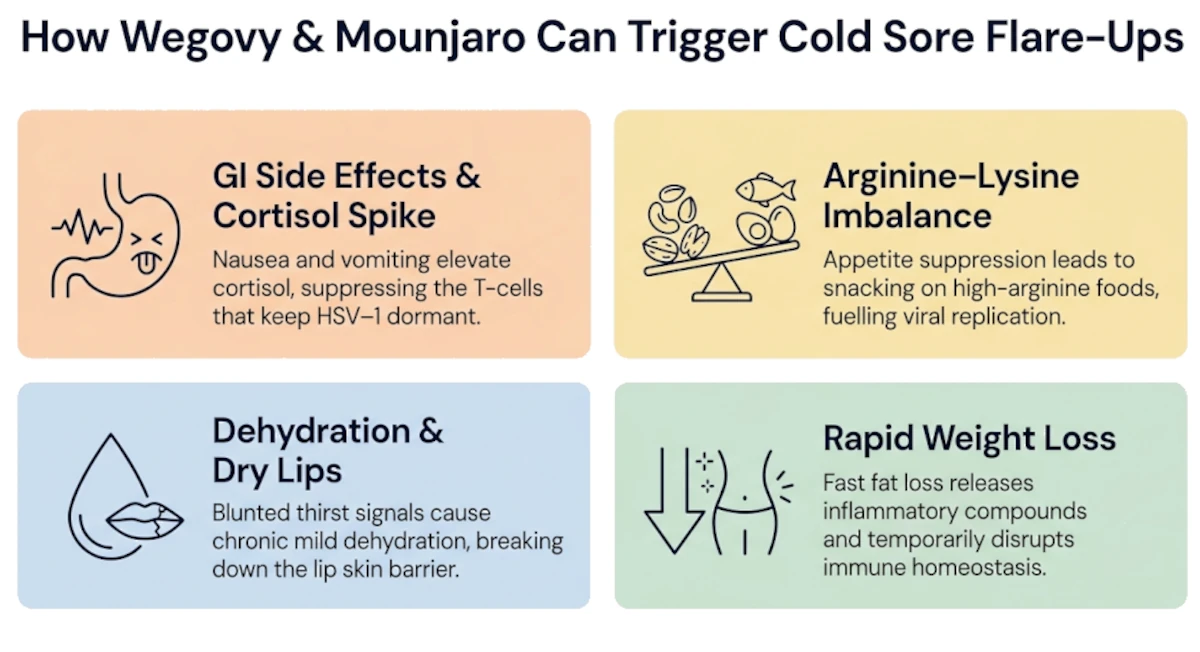
1. GI Side Effects and Cortisol Elevation
Nausea, vomiting, and gastrointestinal discomfort are the primary early side effects of both Wegovy and Mounjaro. At Wegovy's higher semaglutide dose, GI side effects during titration are often more pronounced than those reported with standard Ozempic dosing. Mounjaro clinical trials reported nausea in up to 33% of users and vomiting in up to 25% at higher doses. Even the moderate discomfort of persistent nausea elevates cortisol. Cortisol suppresses CD8+ T-cell function, the primary mechanism that keeps HSV latent. Days or weeks of GI distress during dose escalation represent a sustained window of cortisol-mediated immune suppression that directly raises reactivation risk. Managing GI side effects is therefore not just about comfort. It is a direct HSV prevention strategy.2. The Arginine Trap: How Appetite Suppression Changes What You Eat
Both medications are highly effective at suppressing appetite, sometimes dramatically so. When total food intake drops, many users default to small, easy-to-tolerate foods: crackers, nuts, seeds, dark chocolate, protein bars. Many of these foods are high in arginine, the amino acid HSV-1 requires to replicate its protein coat and proliferate. Meanwhile, protein-rich foods high in lysine (fish, eggs, Greek yogurt, chicken, cottage cheese) are often the first to fall away when appetite is low. The result is an inadvertent dietary shift towards a high arginine-to-lysine ratio: exactly the nutritional environment in which HSV-1 thrives. Our dedicated article on arginine and cold sores explains this mechanism in detail, and our guide to L-lysine supplementation covers how to compensate when dietary lysine is insufficient.3. Dehydration and Lip Barrier Breakdown
One of the least-discussed but most consistent side effects of GLP-1 and dual GIP/GLP-1 therapies is blunted thirst signalling. The hypothalamic pathways modulated by these medications affect not only appetite but also the perception of thirst. Users on Wegovy and Mounjaro frequently report being unable to tell they are dehydrated until symptoms become significant. Chronic mild dehydration has two consequences relevant to cold sores. First, it impairs overall skin barrier function. Second, and more specifically, it causes chapped, cracked, and dry lips. Localized trauma to the lip tissue is a direct mechanical trigger for HSV-1 reactivation. The damaged epithelial barrier provides the virus with easier access to the surface. A user who is unknowingly dehydrated and not applying lip protection is experiencing a continuous low-level reactivation trigger.4. Rapid Weight Loss and Immune Recalibration
Wegovy and Mounjaro are among the most effective weight-loss medications ever approved. Mounjaro trials reported average weight loss of 20–22% of body weight at 72 weeks, a scale of change that places significant metabolic demand on the body. Adipose tissue is immunologically active; it contains resident immune cells and releases adipokines that influence systemic immunity. Rapid fat loss releases these compounds into circulation and temporarily disrupts immune homeostasis. This is not harmful in the long-term. The immune recalibration resolves as the body stabilises at a new weight. But in the first 2–3 months of treatment, during the period of most rapid change, HSV reactivation risk is elevated. The effect is likely more pronounced with Mounjaro than with Wegovy at comparable weight-loss rates, simply because the magnitude of loss tends to be greater with tirzepatide.Prevention: A Targeted Approach for Wegovy and Mounjaro Users
The good news is that each of the four triggers above is directly addressable. The following strategies are most important during the first 8–16 weeks of treatment and during each dose escalation step.
Protect Your Lysine Intake Even When You Are Not Hungry
This is the single highest-impact dietary intervention. When appetite is suppressed, prioritise small but lysine-dense portions: a few spoonfuls of Greek yogurt, a boiled egg, a small serving of cottage cheese or fish. These foods require minimal appetite to eat and directly counteract the arginine-driven viral replication environment. If consistent dietary lysine feels unmanageable during the appetite suppression phase, a 1,000–1,500mg daily L-lysine supplement is safe to use alongside both semaglutide and tirzepatide. There are no known interactions. This is particularly useful during the initial titration period or after dose escalations when appetite suppression is most intense. See our full guide to the best L-lysine supplements for product guidance. For a broader view of non-pharmaceutical HSV management tools, our article on natural alternatives to valacyclovir covers the evidence base in detail.Actively Combat Dehydration
Because both Wegovy and Mounjaro blunt thirst signals, hydration must become a scheduled behaviour rather than a responsive one. Set reminders, keep water visible, and track intake if needed. Aim for at least 2 litres daily, more if you are physically active. For lip-specific barrier protection, apply an occlusive lip treatment (Aquaphor, medical-grade lanolin, or a plain petroleum-based ointment) consistently throughout the day, not just when lips feel dry. For any daytime application, choose a lip product with SPF, since UV exposure is an independent HSV reactivation trigger. Do not wait for chapping to appear; prevention is far more effective than recovery once the lip barrier is compromised.Manage GI Side Effects as a Primary HSV Strategy
Nausea management reduces cortisol load and shortens the immune suppression window. Practical approaches that work alongside GLP-1 therapy: eat very small portions spread across the day rather than skipping meals; ginger tea and peppermint have modest evidence for nausea reduction; staying upright for 30–60 minutes after eating slows gastric discomfort. If nausea is severe enough to cause vomiting, discuss antiemetic options with your prescribing physician. Reducing physical stress is a legitimate clinical rationale, not just a comfort request.Request a Slower Titration Schedule If Flare-Ups Track With Dose Increases
Both Wegovy and Mounjaro use a graduated titration schedule, increasing dose every 4 weeks. If you consistently notice cold sore outbreaks in the days following a dose increase, this is a clear signal that the immune system needs more time to stabilise before the next step. Most prescribing physicians will accommodate a request to hold at a current dose for an additional 4 weeks. This is explicitly endorsed in the prescribing guidance for both medications when side effects are not well tolerated. Raising the dose more slowly directly reduces the magnitude of each physiological disruption.Consider Prophylactic Antiviral Therapy for the Adaptation Window
If you have a history of frequent cold sore outbreaks, defined as more than 4 per year, discuss low-dose suppressive antiviral therapy with your doctor before starting Wegovy or Mounjaro. Valacyclovir 500mg daily or acyclovir 400mg twice daily as short-term prophylaxis during the first 8–12 weeks of GLP-1 treatment is a well-established strategy for preventing HSV reactivation during periods of known immune vulnerability. There are no known pharmacokinetic interactions between valacyclovir or acyclovir and either semaglutide or tirzepatide. If a cold sore does break through, over-the-counter topical docosanol (Abreva) is most effective when applied at the very first sign of tingling, before a visible blister forms. Waiting until the blister is visible significantly reduces topical treatment effectiveness.Does the Cold Sore Problem Resolve Over Time?
For the majority of users, yes. The elevated reactivation risk is concentrated in the dose-escalation phase, typically the first 3–5 months of treatment. As GI side effects resolve, eating habits stabilise, the body adapts to the new metabolic environment, and cortisol levels normalise. All four primary triggers diminish together. Users who maintain adequate hydration and protect their lysine-arginine ratio from the start tend to experience the fewest outbreaks during this period.
If cold sore outbreaks persist beyond the 3-month mark after reaching a stable maintenance dose, the medication is unlikely to be the ongoing cause. At that point, a broader review of HSV triggers is warranted: sleep quality, overall stress load, dietary patterns, sun exposure. Our guide on cold sore triggers and our companion article on Ozempic and cold sores cover the wider landscape of HSV reactivation factors.
Neither Wegovy nor Mounjaro has been shown to cause herpes infections or increase long-term viral shedding. The pattern of early-treatment outbreaks reflects a temporary physiological adjustment, not a permanent change to your immune status. With the right preparation, the adjustment period is manageable and should not require discontinuing treatment.
Wegovy and Mounjaro Cold Sores FAQs
Does Wegovy cause cold sores?
Wegovy does not directly cause cold sores, but the higher-dose semaglutide in Wegovy (2.4mg weekly) creates more intense appetite suppression and GI side effects than standard Ozempic doses. These indirect effects — particularly the arginine trap from restricted eating and cortisol elevation from nausea — can trigger HSV-1 reactivation in people who already carry the virus. The risk is highest during dose escalation and typically resolves after the body adapts to a stable maintenance dose.
Does Mounjaro cause cold sores or herpes flare-ups?
Mounjaro (tirzepatide) does not directly trigger herpes outbreaks, but its dual GIP and GLP-1 receptor agonism affects a broader range of tissues than semaglutide alone, including immune-resident cells. Combined with the rapid and significant weight loss Mounjaro produces, users may experience a more pronounced immune adjustment period than with other GLP-1 medications. The same prevention strategies apply: protect your lysine intake, stay hydrated, manage GI side effects proactively, and consider suppressive antiviral therapy during the titration phase if you have a history of frequent outbreaks.
Why am I getting cold sores every time I increase my Wegovy or Mounjaro dose?
If cold sores consistently appear after each dose increase, the pattern strongly suggests that the physiological stress of dose escalation — heightened nausea, stronger appetite suppression, and metabolic adjustment — is temporarily suppressing the immune surveillance that keeps HSV-1 dormant. The most practical response is to request a slower titration schedule from your prescribing physician. Holding each dose for 8 weeks instead of 4 allows the immune system to stabilise before the next escalation. Prophylactic antiviral therapy during each escalation window is also an option worth discussing.
Is it safe to take valacyclovir with Wegovy or Mounjaro?
Yes. There are no known pharmacokinetic interactions between valacyclovir (or acyclovir) and either semaglutide or tirzepatide. Both antivirals are processed through entirely different metabolic pathways from GLP-1 medications. Always inform your prescribing physician of all medications you are taking, but valacyclovir as short-term prophylaxis or acute treatment alongside Wegovy or Mounjaro is clinically well-established and safe for most people with normal kidney function.
What foods should I eat on Wegovy or Mounjaro to avoid cold sores?
Prioritise lysine-rich foods in whatever small quantities your appetite allows: Greek yogurt, cottage cheese, eggs, fish, chicken, and low-fat dairy. Avoid defaulting to nuts, seeds, dark chocolate, and protein bars as your primary snacks, as these are high in arginine — the amino acid HSV-1 needs to replicate. If your appetite is too suppressed to maintain adequate dietary lysine, a 1,000–1,500mg daily L-lysine supplement is safe alongside both medications and compensates effectively. Our guide to arginine and cold sores explains the biochemical reasoning in full.
How long does the cold sore risk last when starting Wegovy or Mounjaro?
The elevated risk period is typically the first 3–5 months — encompassing the dose titration phase and the initial weeks at the maintenance dose. This aligns with the window when GI side effects are most pronounced, appetite suppression is strongest, and weight loss is most rapid. After the body adapts, all four primary triggers — GI stress, arginine imbalance, dehydration, and immune recalibration — typically diminish together. Users who experience outbreaks beyond this window should investigate other HSV triggers rather than attributing them to the medication.
Should I stop Wegovy or Mounjaro because of cold sore flare-ups?
In the vast majority of cases, no. Cold sore flare-ups during the adaptation period are uncomfortable but manageable, and discontinuing a clinically beneficial weight-management medication is rarely warranted for this reason alone. A better approach is to proactively address the underlying triggers: slow down titration if outbreaks track with dose increases, supplement with L-lysine, stay aggressively hydrated, and discuss prophylactic antiviral therapy with your doctor to cover the highest-risk adaptation window.
Image: Simplix Viral Defense
Simplix Viral Defense
Why we love it:
- Specifically formulated to reduce cold sore outbreaks
- Contains L-Lysine, Red Marine Algae, and Lemon Balm
- Supports immune system during viral challenges
- Helps manage stress-triggered outbreaks