Herpesviruses are widespread across the animal kingdom, infecting a vast array of species. These viruses have been found in virtually every vertebrate group studied, including mammals, birds, fish, reptiles, amphibians, and even mollusks.
Each animal species typically carries its own species-specific herpesvirus, which has evolved to infect that particular host.
This host specificity means that herpesviruses generally do not cross species barriers or infect humans.
Herpesviruses establish lifelong infections in their hosts, often remaining latent and reactivating under stress, illness, or immunosuppression.
While the symptoms and severity vary widely depending on the virus and host species, many herpesviruses cause diseases characterized by lesions, respiratory issues, or reproductive problems.
For a primer on how the human herpes simplex virus works, see what is herpes.
Simplix Viral Defense
Cold Sore & HSV Support

Simplix Viral Defense
Cold Sore & HSV Support
Synergistic formula combining L-Lysine, shiitake mushroom, and marine bioactives for comprehensive immune support.
SHOP NOW & SAVE 15%Herpesviruses in Common Domestic Animals
Dogs are commonly infected with canine herpesvirus (CHV-1), which is widespread and lifelong in the canine population.
CHV-1 is particularly dangerous for puppies under three weeks old, causing respiratory distress, systemic illness, and reproductive failures.
Adult dogs often carry the virus without symptoms but can shed it intermittently, posing a risk to vulnerable puppies. Cats harbor feline herpesvirus type 1 (FHV-1), the causative agent of feline viral rhinotracheitis.
This contagious respiratory disease manifests with sneezing, nasal congestion, eye discharge, and conjunctivitis.
FHV-1 is species-specific and does not infect humans or other animals. Rabbits can be infected by several herpesviruses, including rabbit-specific viruses that cause tissue lesions and respiratory symptoms.
Occasionally, rabbits may also be infected experimentally or rarely naturally with human herpes simplex virus 1 (HSV-1), which can cause eye infections and neurological disease but not typical cold sores.
Herpesviruses in Livestock and Other Mammals
Pigs are hosts to pseudorabies virus (Suid herpesvirus-1), which causes Aujeszky's disease.
This virus primarily affects swine but can infect secondary hosts such as cattle, horses, dogs, and cats, causing neurological and respiratory symptoms in these animals.
Pseudorabies virus does not infect humans. Cattle are affected by bovine herpesvirus types 1 and 2, responsible for infectious bovine rhinotracheitis, pustular vulvovaginitis, bovine mammillitis, and pseudo-lumpy skin disease.
These viruses cause respiratory and skin diseases that impact cattle health and productivity. Horses carry multiple equine herpesviruses (EHV-1 through EHV-5), which cause a range of diseases including abortion, respiratory illness (rhinopneumonitis), coital exanthema, and equine cytomegalovirus infection.
These viruses are species-specific and do not infect humans. Other mammals such as goats harbor caprine herpesvirus 1, which causes conjunctivitis and respiratory disease, further illustrating the diversity of herpesviruses among livestock.
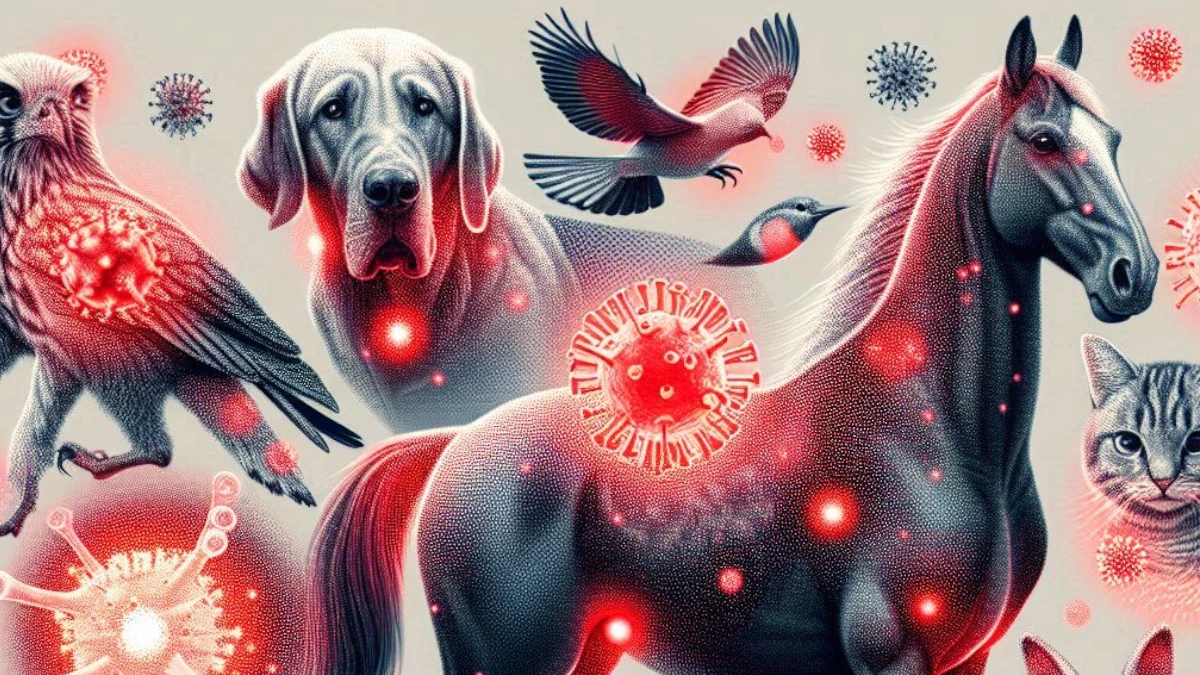
Herpesviruses in Birds, Marsupials, and Exotic Species
Birds are infected by several herpesviruses, including Gallid herpesvirus 1, which causes infectious laryngotracheitis in chickens; Gallid herpesvirus 2, the agent of Marek’s disease, a lymphoproliferative disorder; and duck herpesvirus 1, responsible for duck plague.
These viruses are highly contagious among birds but do not infect mammals or humans. Australian marsupials such as kangaroos, wallabies, wombats, and Tasmanian devils carry their own alphaherpesviruses and gammaherpesviruses, including Macropodid alphaherpesvirus 1 and 2.
These viruses cause disease specific to marsupials and have not been shown to infect other species. Other exotic mammals, including mink, panthers, and various wild rabbits, also harbor species-specific herpesviruses that cause tissue lesions or respiratory illnesses, emphasizing the broad distribution of herpesviruses across diverse animal species.
Human Herpesviruses and Cross-Species Infection
Human herpes simplex virus type 1 (HSV-1) primarily infects humans and is the cause of cold sores around the lips and mouth.
While HSV-1 is largely species-specific, there have been rare cases of natural infection in animals such as rabbits, where it can cause eye infections and, occasionally, severe neurological disease.
However, these infections do not produce the classic cold sores seen in humans.
Experimental infections of animals like mice, guinea pigs, and rabbits with HSV-1 and HSV-2 are common in research to study viral pathogenesis and test treatments.
Natural cross-species infections remain uncommon and generally do not pose a significant zoonotic risk.
One notable exception is Cercopithecine herpesvirus 1 (Herpes B virus), which infects macaques and can cause severe disease in humans, although transmission is rare and usually occurs through close contact or bites.
Species Specificity and Zoonotic Risks
Herpesviruses exhibit strong species specificity, having co-evolved with their hosts over millions of years.
This specificity limits cross-species transmission, making zoonotic infections very rare.
Some herpesviruses can infect closely related species or cause disease in secondary hosts—for example, pseudorabies virus infecting dogs or cattle—but transmission to humans is exceedingly uncommon.
Overall, herpesviruses establish lifelong latent infections within their natural hosts and reactivate under stress, but jumping between species, especially to humans, is an exception rather than the rule.
Clinical Signs of Herpesvirus Infection in Animals
Herpesvirus infections in animals often cause symptoms similar to those seen in humans, such as blisters, sores, respiratory distress, or neurological signs, but these vary widely depending on the virus and species.
For example, rabbits infected with Herpes cuniculi develop wounds and blisters on the face, eyes, and genitals.
Dogs with canine herpesvirus typically experience systemic illness in puppies and reproductive issues rather than cold sores.
Cats infected with FHV-1 show respiratory symptoms including sneezing and eye discharge, while birds may develop respiratory disease or tumors caused by their herpesviruses.
Animal Models in Herpesvirus Research
Animal species such as mice, guinea pigs, and rabbits serve as important models for studying human herpes simplex virus infections.
These models develop herpes lesions similar to human cold sores under controlled experimental conditions, which helps researchers understand viral behavior and develop antiviral treatments.
Experimental infection of animals with HSV-1 and HSV-2 has been instrumental in advancing knowledge of viral pathogenesis, immune responses, and vaccine development.
For the latest on where this research stands, see our guide to herpes vaccine and cure candidates in 2026.
Summary: Herpesviruses Are Widespread but Host-Adapted
Herpesviruses infect a broad range of animal species, each with its own adapted virus causing species-specific diseases.
While some animals develop cold sore-like lesions from their herpesviruses, the classic cold sores in humans are caused exclusively by HSV-1.
Cross-species transmission and zoonotic risks are minimal, with rare exceptions involving close contact with non-human primates.
Understanding the diversity and host specificity of herpesviruses is crucial for veterinary care, zoonotic disease prevention, and biomedical research.
To understand just how widespread human herpesvirus is, see herpes is more common than you think.
Frequently Asked Questions About Herpesviruses in Animals
Do animals get herpes?
Yes, herpesviruses infect a wide range of animals including mammals, birds, reptiles, amphibians, and fish. Each species typically has its own specific herpesvirus adapted to that host.
Can herpesviruses spread from animals to humans?
Herpesviruses are generally species-specific, so transmission from animals to humans is very rare. The notable exception is Herpes B virus from macaques, which can infect humans in rare cases.
Can dogs or cats give humans herpes?
No. Canine herpesvirus and feline herpesvirus infect only dogs and cats, respectively, and do not infect humans.
Do animals get cold sores like humans?
Some animals develop herpesvirus lesions that resemble cold sores, but the classic cold sores caused by human HSV-1 are unique to humans. Animals have their own herpesviruses causing similar but species-specific symptoms.
Can human herpes simplex virus infect animals?
Natural infection of animals with human HSV-1 or HSV-2 is rare but can occur experimentally. Occasionally, HSV-1 infects rabbits causing eye infections or neurological disease, but this is uncommon.
Are herpesviruses in animals dangerous?
Herpesviruses can cause serious illness in some animals, especially young or immunocompromised individuals. For example, canine herpesvirus can be fatal in puppies, and equine herpesviruses can cause abortion in horses.
How do herpesviruses stay in animals?
Herpesviruses establish lifelong latent infections in their hosts, reactivating periodically under stress or immune suppression, which can cause recurrent symptoms or virus shedding.

Image: Bravado Labs Advanced Lysine Immune Boost
Bravado Labs Advanced Lysine Immune Boost
Why we love it:
- Verified Customer Favorite
- High Quality Ingredients
As an affiliate, we earn from qualifying purchases.